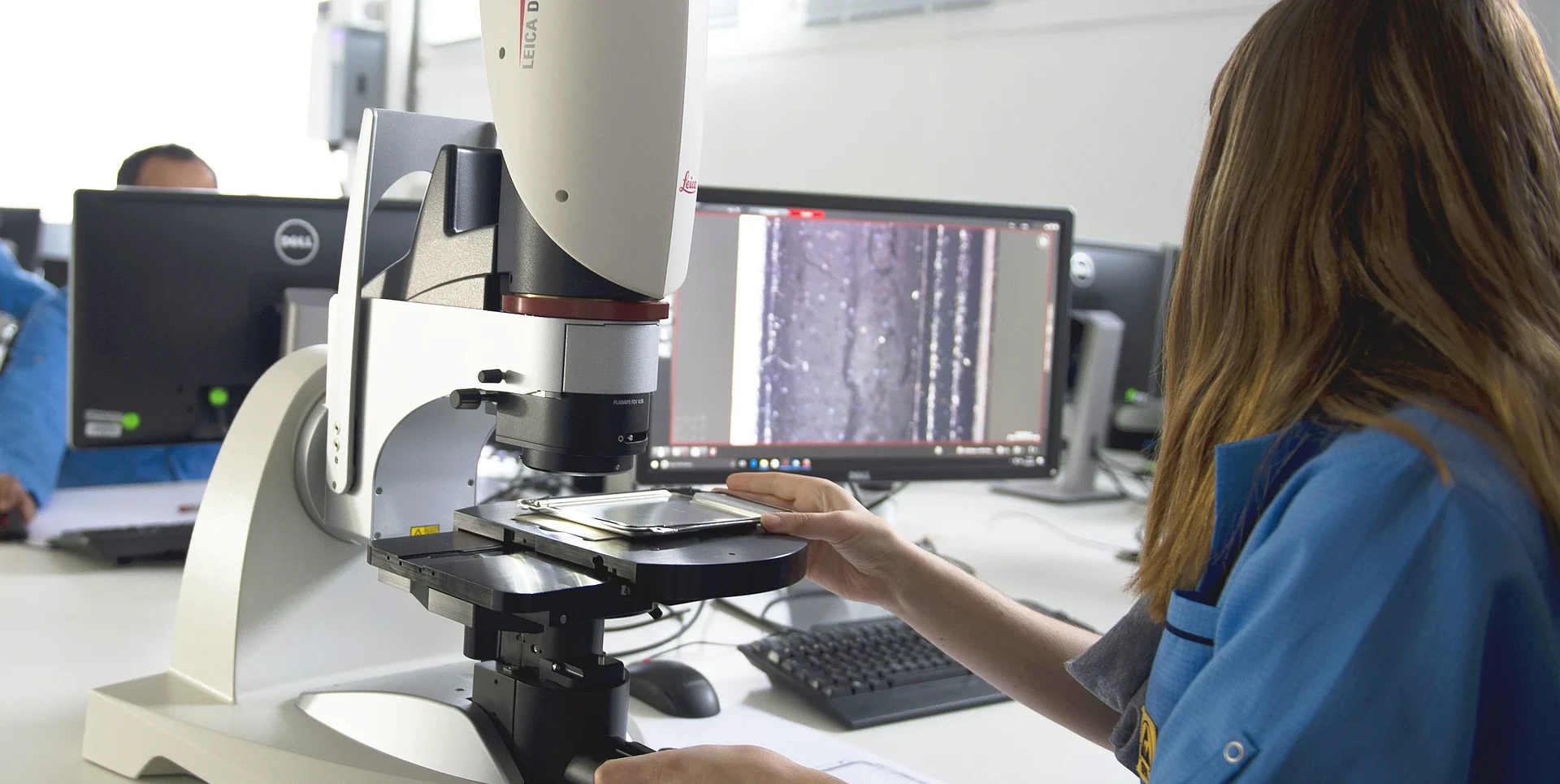
Visual inspection of electronic components
Test Laboratory: IPC Visual Inspection According to IPC A 600 & 610
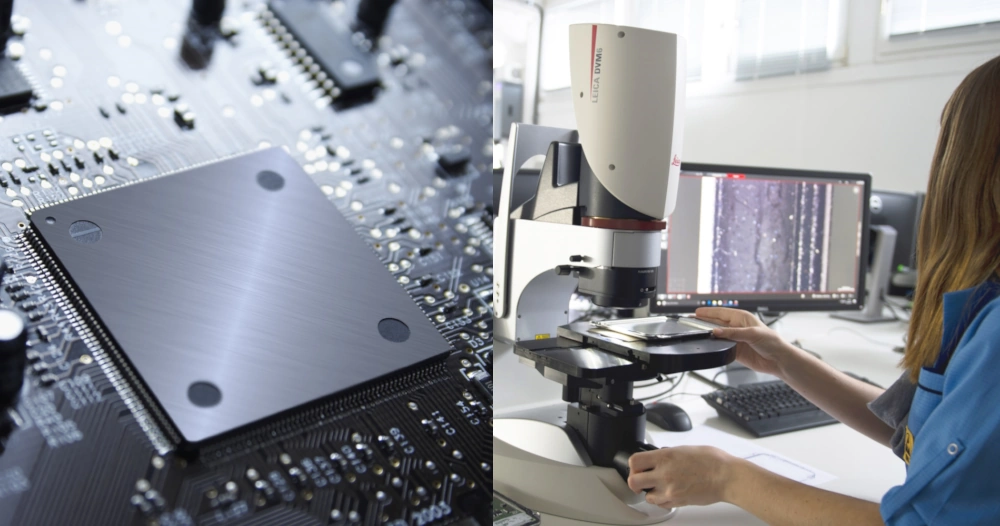
As an electronics testing laboratory—specializing, among other things, in IPC visual inspections—we perform visual inspections of electronic components, assemblies, and printed circuit boards in accordance with the international standards IPC A610 and IPC A600. With trained specialists, state-of-the-art microscopy technology, and many years of experience, we reliably identify manufacturing defects, deviations, and damage patterns in compliance with industry standards. Visual inspection is a key component of quality assurance, defect analysis, and process optimization.
Quality assurance
through visual inspection of electronic products
What we deliver:
Non-destructive visual inspection in accordance with IPC-A610
(Acceptability of Electronic Assemblies).
Clear classification: Class 1 (general electronics), Class 2 (higher requirements, industry), Class 3 (high-performance). Comprehensive testing of all components: PCBs, solder connections (through-hole and SMT), passive and active components, mechanical components, cables/wire connections, connectors, optoelectronic components.
Customer benefits:
IPC-A610 inspection enables manufacturers to achieve consistent, high-quality assemblies; the customer determines the class to be applied. We combine modern technologies with a trained eye to ensure the highest quality standards.
Typical use cases:
- Evaluation of Solder Joints (THT, SMT, BGA, QFN)
- Detection of delamination, voids, cracks, and surface defects
- Inspection of Printed Circuit Boards in accordance with IPC-A610 and IPC-A600
- Analysis of defects following product testing or in the event of damage
- Correlation with IPC Classes (1–3)
Scope of Services:
- Visual Inspection in accordance with IPC-A610 / IPC-A600
- Use of reflected-light, transmitted-light, and digital microscopes
- Evaluation of solder joint quality, wetting, geometry, and defects
- Documentation of all relevant findings
- Optional: Combination with micrograph analysis, SEM/EDX, or whisker analysis
- According to customer specifications
Result:
- Standard-compliant evaluation according to IPC-A610 / IPC-A600
- Identification of manufacturing deviations or the cause of damage
- High-resolution image documentation
- Clear recommendations for action in manufacturing, development, or quality assurance
Class overview:
- Class 1:
General electronics products (consumer goods). Focus on functionality;
less stringent requirements. - Class 2:
Electronics with higher requirements
(industrial use, uninterrupted continuous operation; longer service life). - Class 3:
High-performance electronics (e.g., automotive, aerospace, medical, military);
the most demanding requirements and strict tolerances.
Applicable components according to IPC-A610:
- Printed Circuit Boards (PCBs):
The quality of the printed circuit board—including the solder mask, conductive traces, and through-holes—is of paramount importance. - Solder Joints:
Criteria for the acceptance of solder joints, including both through-hole and surface-mount (SMT) assemblies. - Passive components:
Typical components include resistors, capacitors, and inductors,
for which correct positioning, solder joint quality, and mechanical damage are inspected. - Active Components:
Active components include ICs (integrated circuits), transistors, and diodes,
which are also checked for proper placement and solder quality. - Mechanical components:
Screws, brackets, and housings, which are essential for the mechanical integrity of the assembly. - Cable and Wire Connections:
Guidelines for the quality and reliability of cable and wire connections and their fasteners. - Connectors:
These components must be installed correctly and securely to ensure a reliable electrical connection. - Optoelectronic components:
LEDs, LCDs, and other light-emitting or light-receiving components,
for which assembly and soldering quality are critical.
Your advantage:
- Consistent quality and reliability of your assemblies
- Flexible adaptation to your requirements and standards
- State-of-the-art technologies and trained specialists