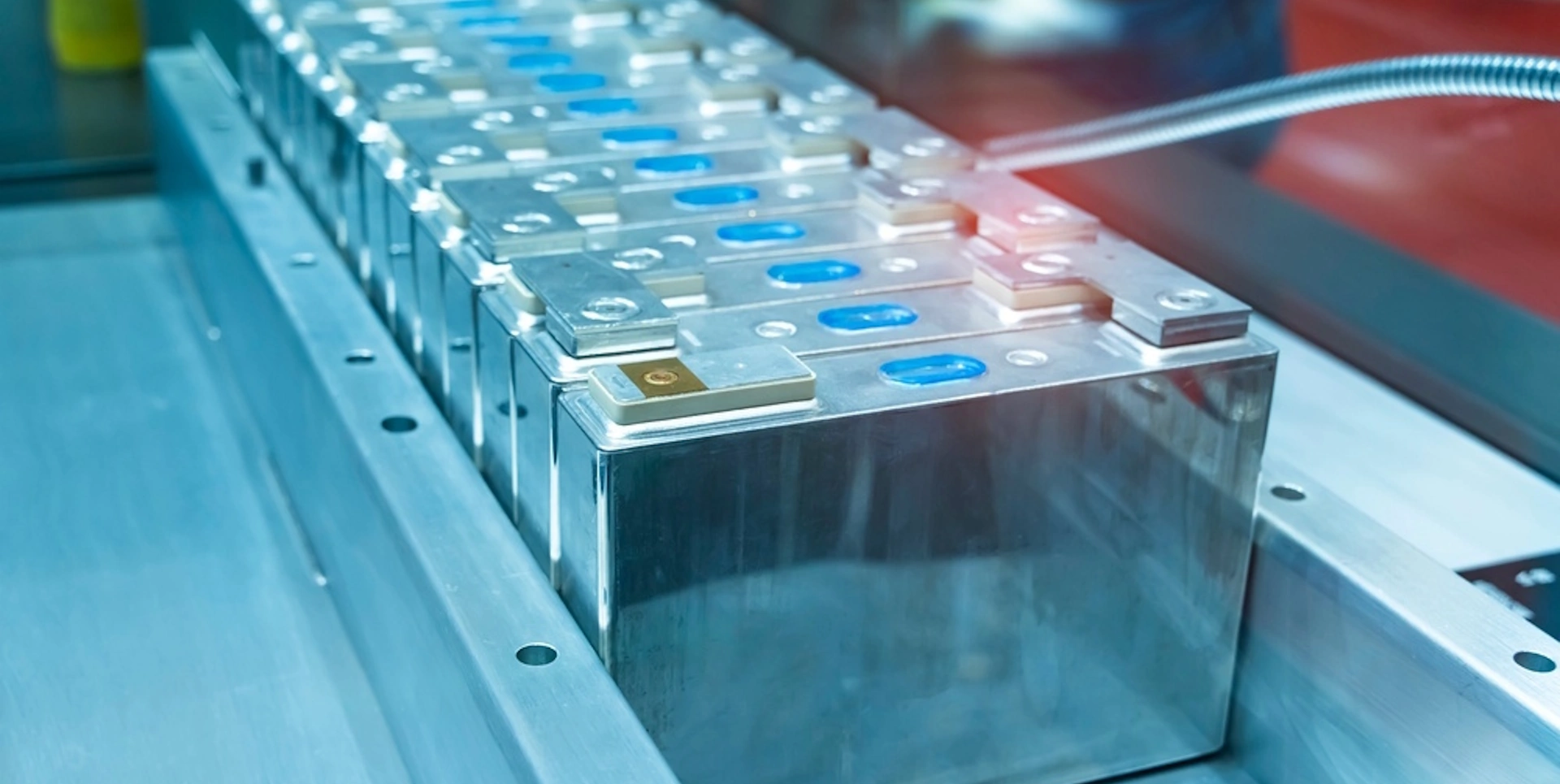
Post-mortem battery cell inspection
Testing Laboratory: Battery Cell Testing & Post-Mortem Analysis
Are you looking for a testing laboratory for post-mortem battery (cell) testing? We open, analyze, and evaluate lithium-ion cells, sodium-ion (Na-ion) cells, zinc-based batteries, solid-state batteries, aluminum-ion cells, magnesium batteries, and lead-acid batteries—safely, reproducibly, and under controlled conditions. Our post-mortem analysis provides complete transparency into the internal condition of the cell—ideal for determining the cause of failure, assessing quality, and optimizing processes in development, manufacturing, and production testing.
AT A GLANCE
Intended for: Battery development, automotive OEMs, cell manufacturers, research institutions.
- Safe Cell Lysis & Analysis – Controlled Conditions, Reproducible Results
- Materialographic & SEM/EDX Analysis – Electrodes, Separators, Layer Structures, Cracks
- Ideal for Development & Production – Automotive, Cell Manufacturers, Research

Typical Cases
- Loss of capacity or increased internal resistance
- Gas or bloating
- Separator or electrode failure
- Contact and Current Path Problems
- Aging and Degradation Mechanisms
Scope of Services
- Cell lysis under defined safety and process conditions
- Materialographic Section Preparation
- Analysis of Cracks, Delaminations, Porosity, and Layer Structures
- Evaluation of Laser Welds and Contact Areas
- SEM/EDX Analysis (optional)
- Complete documentation of all findings
Materialographic Sections
Imaging of electrodes, separators, layer structures, and contact areas to evaluate structure, integrity, and manufacturing quality.
Analysis of Cracks, Delaminations, and Porosity
Identification of structural defects—essential for determining the causes of capacity loss, gas leakage, or manufacturing defects.
Laser Welds & Contact Areas
Evaluation of joints, welds, and current paths to identify contact issues or manufacturing deviations.
Weld Analysis
Evaluation of the quality, integrity, and durability of welded joints in metals, electronic assemblies, and battery cells. By combining section preparation, optical microscopy, SEM analysis, and EDX element mapping, we identify bonding defects, porosity, cracks, weld inclusions, and material incompatibilities. For quality assurance, process optimization, and failure analysis. Analysis of soldered and welded joints in electronic assemblies; investigation of contact and current path issues in battery cells; identification of pores, bonding defects, inclusions, or hot cracks; comparison of welding parameters or manufacturing processes.
Supplementary Procedures
SEM/EDX analysis, macro/micro sections, LSM coating thickness measurement, damage analysis.
Result
- Clear identification of the cause of the error
- High-resolution image and findings documentation
- Specific recommendations for action in the areas of development, manufacturing, or quality assurance
Processing time: a few days (depending on the cell type)
Pricing Indicator: Project-Based