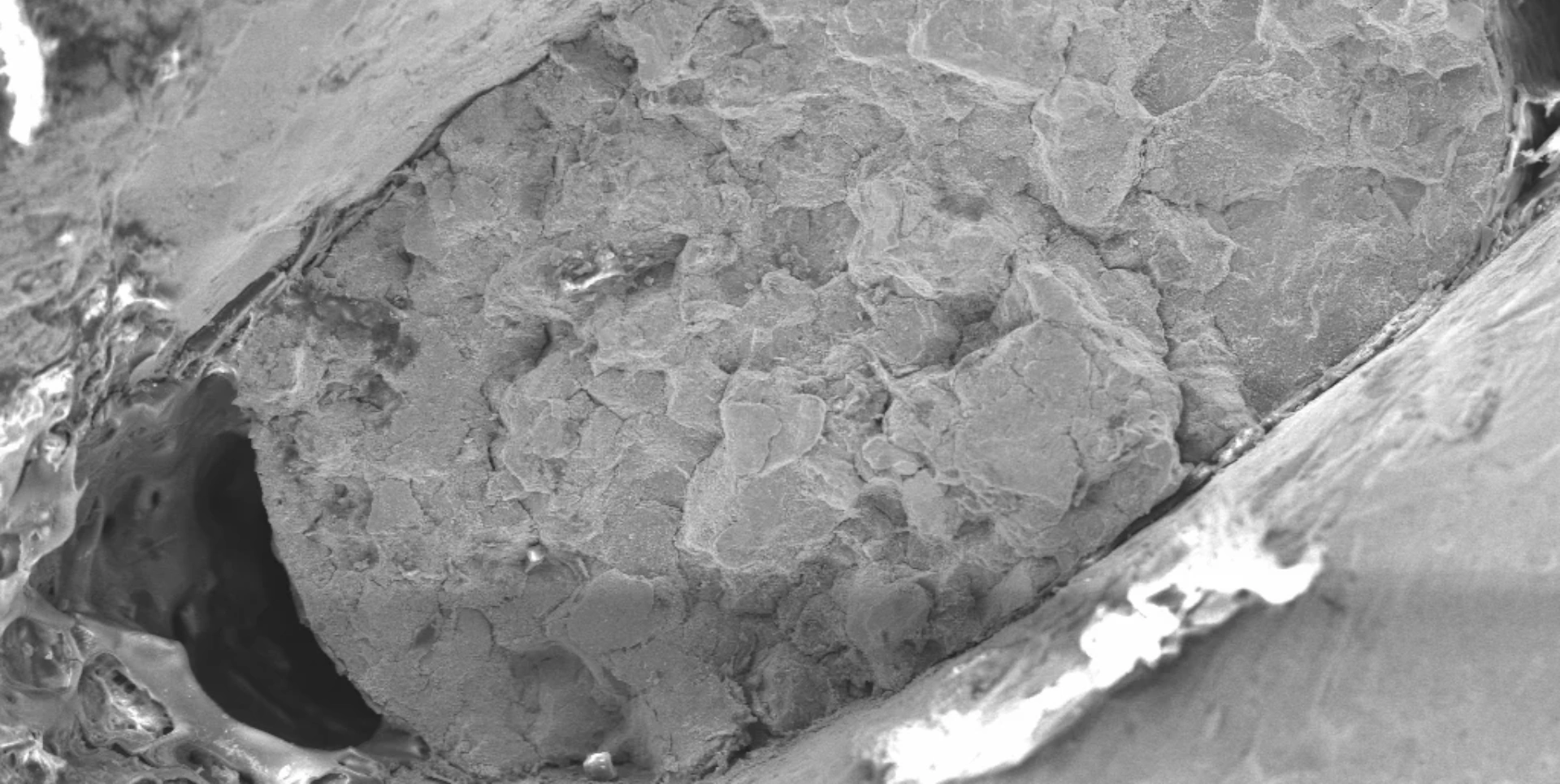
Fracture Surface Analysis
Better to predict than to fail
Test Laboratory: Fracture Surface Analysis
Using our fracture surface analysis, we investigate the failure behavior of metals, ceramics, and composite materials. By combining macroscopic examination, light microscopy ( LSM) evaluation, and high-resolution SEM analysis, we identify fracture mechanisms, crack causes, and material weaknesses. Fracture surface analysis is a key method for damage investigation and quality assessment.
BENEFITS
- Identification of causes: material defects, overload, corrosion, or fatigue
- Determining the point where a crack begins: Localization using markings (reference lines, crack edges)
- Load reconstruction: sudden failure (brittle) or gradual failure (ductile/cyclic); determination of the frequency and magnitude of operating loads
- Evidentiary Reliability: The microscopic details on the fracture surface constitute objective physical evidence, including for damage assessments
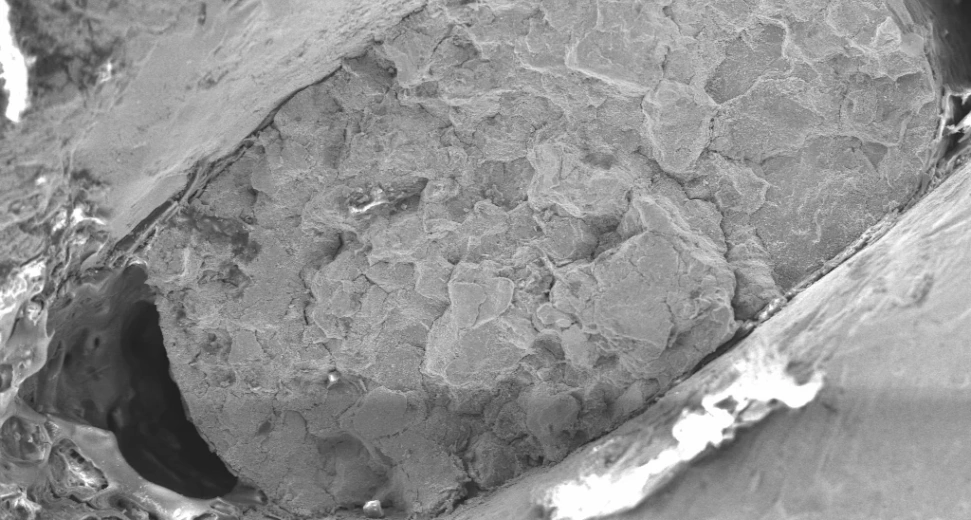
Typical use cases:
- Root Cause Analysis for Component Failure
- Analysis of brittle, mixed, fatigue, or ductile fracture mechanisms
- Evaluation of fatigue cracks, initial cracks, or delaminations,
- Investigation of Weld or Solder Joint Failures
- Identification of material defects, inclusions, or porosity
Scope of Services:
- Macroscopic examination of the fracture surface
- Light-microscopic analysis of relevant areas
- SEM Analysis for Visualizing Fine Structures and Crack Origins
- EDX Analysis for the Identification of Particles or Contaminants
- Documentation of all findings, including images
Result:
- Clear identification of the fracture mechanism
- Determining the Primary Cause of Damage
- Assessment of material quality, manufacturing defects, or the effects of stress
- Recommendations for Quality Assurance, Design, or Process Optimization